

Key Takeaways
- Viral pink eye usually clears in 7 to 14 days, while some cases last for 2 or 3 weeks.
- Bacterial pink eye often improves in 2 to 5 days, though it can take up to 2 weeks.
- Allergic pink eye is tied to factors like pollen, dust, and pet dander, and it isn’t contagious.
- Viral and bacterial types spread easily while there’s discharge and watering.
- Eye pain, light sensitivity, or blurred vision calls for a visit with an eye doctor.
What Pink Eye Feels Like Day to Day
You wake up, and one eye looks red in the mirror. By lunchtime, it burns every time you blink, and you keep reaching up to rub it. Chances are, you have pink eye.
Pink eye can last anywhere from a few days to a couple weeks, depending on whether the cause is viral, bacterial, or allergic. If you’re experiencing redness and itchiness, our team at Eye Care for East Texas can take a look at your eyes to help you find a way to resolve your discomfort.
Symptoms & When They Peak
The most common symptoms of pink eye include:
- Redness, itching, and burning
- Watery or sticky discharge
- Swollen lids, especially in the morning
- A gritty feeling, like a grain of sand is stuck under the lid
Symptoms are often strongest during the first couple of days. After that, the redness and discharge tend to ease off slowly rather than disappearing overnight.
How Long Each Type of Pink Eye Lasts
Viral Pink Eye
Viral pink eye usually clears up in 7 to 14 days. However, some cases can stretch on for 2 or 3 weeks. Antibiotics aren’t effective against viral pink eye, so eye drops from a pharmacy shelf won’t help.
Bacterial Pink Eye
Mild bacterial cases of pink eye often improve in 2 to 5 days. More severe cases can take up to 2 weeks. Prescribed drops from an optometrist may shorten how long it sticks around.
Allergic Pink Eye
This type of pink eye shows up alongside pollen, dust, or pet dander. It tends to improve once you’re away from whatever set it off. However, allergic pink eye isn’t actually contagious, so nobody else at the dinner table has to worry.
How Long You Stay Contagious
Viral and bacterial pink eye spread easily, which is why 1 case in a classroom can turn into 5. Active discharge and watering are both signs that a person is still contagious.
Many of our patients ask us when it’s alright to return to work or school. A general rule is to wait until the discharge has stopped and the eye looks calm again. Many schools and workplaces have their own policies, so it helps to check before sending your child back to school or heading in to work yourself.

What Helps Pink Eye Clear Up Faster
A cool compress laid over closed lids for a few minutes can take the edge off the burning, and artificial tears can rinse away that gritty feeling.
Frequent handwashing is also important. Wash before and after you touch your face, and resist rubbing your eye even when it itches. Don’t share towels, and change your pillowcase every night so that you’re not pressing yesterday’s germs back into your eye.
What to Avoid While You Heal
Pause contact lens wear until an eye doctor clears you to start again, and wear your glasses instead. Toss away any eye makeup you were using right before symptoms started, along with any brushes and applicators that you can’t disinfect.
When to See an Eye Doctor in Longview
Many cases of pink eye settle down on their own, but some persist and deserve a closer look. Reach out immediately if you notice any of these signs:
- Eye pain
- Sensitivity to light
- Blurred vision
- Symptoms getting worse or not improving
- Red, watery eyes in newborns
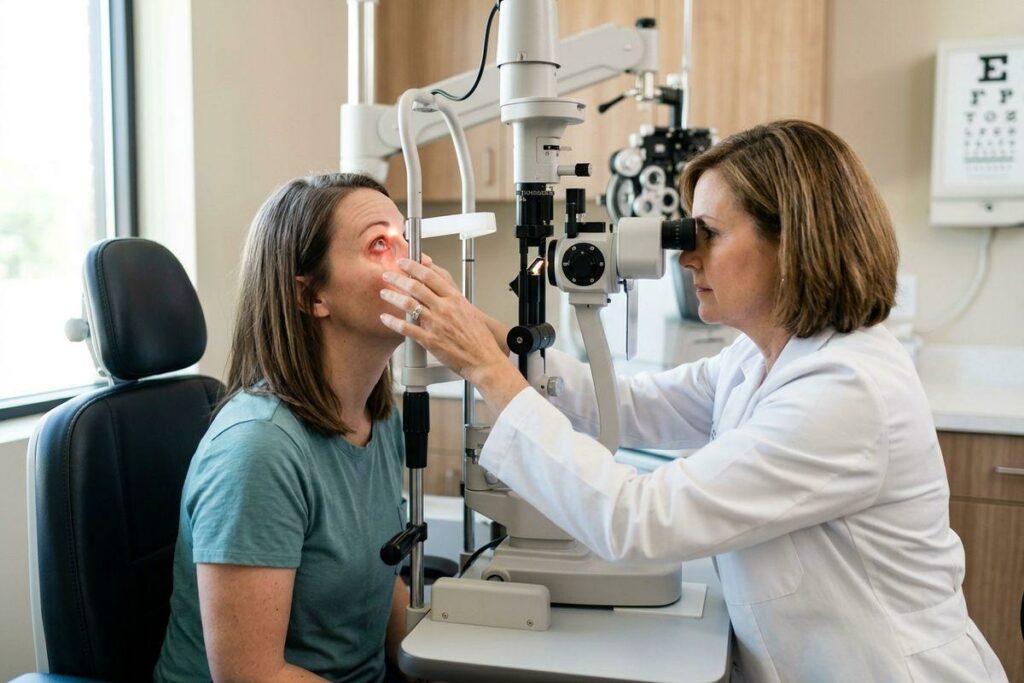
As your eye doctor in Longview, we’ll examine your eyes and ask you about how your symptoms started. From there, we can put together a care plan that addresses your situation.
Get Answers About Your Eyes from a Team Who Knows You
Waiting out pink eye is a lot easier when you know which kind you’re dealing with and when things should start improving. That’s why our team at Eye Care for East Texas always make sure to take the time to look at your eyes, listen to your needs, and explain your situation.
Book an appointment with us today, and let us help you find the right path forward.