

Key Takeaways
- Eye strain comes from close-up tasks like screens and reading. It can feel uncomfortable, but it is not considered dangerous.
- Watch for headaches, blurred vision, dry or red eyes, and light sensitivity.
- Simple habits like the 20-20-20 rule, blinking often, and taking breaks can ease symptoms.
- Eye strain often fades with rest, but symptoms that stick around need a closer look.
- An eye doctor in Longview can check for other causes and recommend glasses or coatings that can help.
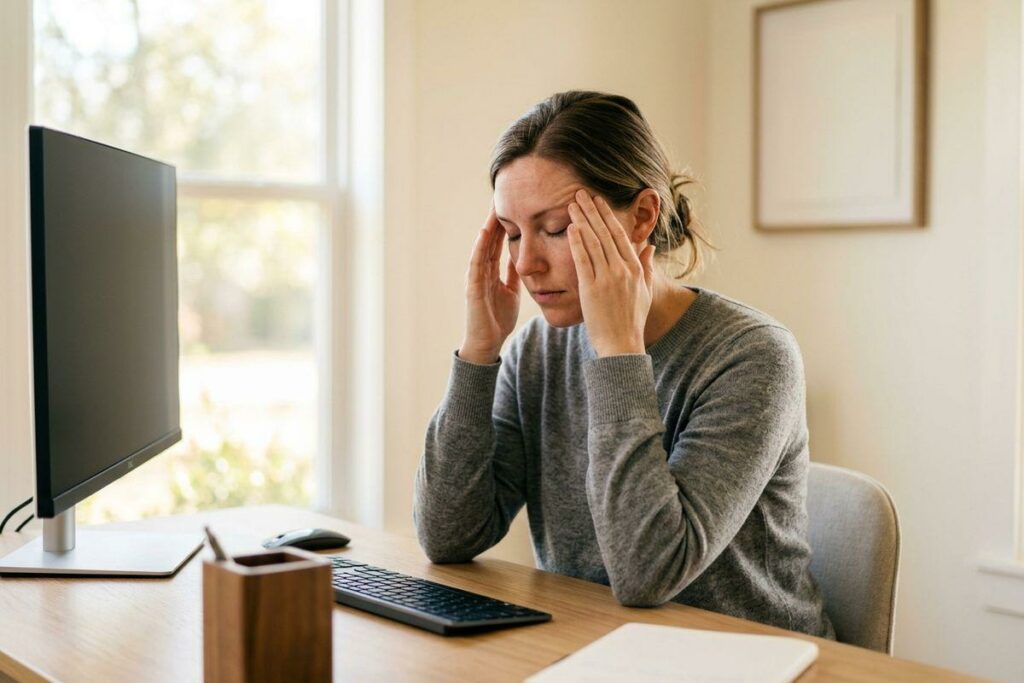
Your eyes feel heavy by mid-afternoon. The words on your screen start to blur, and a dull ache creeps in behind your eyebrows. You rub your eyes, look away for a second, then go right back to the screen because the work isn’t done yet.
Our team at Eye Care for East Texas hears this complaint often, and the fix is usually simple. Eye strain happens when you ask your eyes to focus on something close for too long, and you can relieve it with breaks, better habits, and in some cases, a visit to your eye doctor. The good news is that most of the time, you can find relief without much fuss.
What Is Eye Strain?
Eye strain is a group of symptoms that shows up after your eyes work hard on near vision tasks. Staring at a screen, reading for hours, or working in dim light all ask a lot from the small muscles inside your eye that control focus.
It’s uncomfortable, not dangerous. Your eyes aren’t damaged from strain itself, but the discomfort can slow you down and make focus harder to hold onto.
Signs and Symptoms to Watch For
Eye strain shows up differently for everyone, but a few patterns are common. Pay attention if you notice any of the following:
- Headaches or migraines that show up during or after close work
- Blurred vision that comes and goes
- Dry or red eyes, especially after screen time
- Sensitivity to bright light or glare
What Else Feels Like Eye Strain?
Some symptoms that feel like eye strain may actually come from something else. Allergies and sinus pressure can cause similar headaches and eye discomfort. Uncorrected refractive errors, meaning your glasses or contacts prescription needs an update, can also make your eyes work harder than they should and mimic strain.
Simple Ways to Ease Eye Strain At Home
Adjust Your Screen Habits
Your screen habits matter more than you might think. To help ease strain at home:
- Follow the 20-20-20 rule. Every 20 minutes, look at something 20 feet away for 20 seconds.
- Sit at least an arm’s length from your screen instead of hunching close.
- Reduce glare from windows or overhead lights with a screen filter or an anti-glare coating on your glasses.

Care for Dry, Tired Eyes
Screens make you blink less, which dries out your eyes fast. Make a habit of blinking fully and often, even when you’re focused on a task. Preservative-free artificial tears can help refresh your eyes throughout the day. If your home or office air feels dry, a humidifier can add moisture back into the room.
Rest and Relax Eye Muscles
Your eye muscles need breaks just like any other muscle. Step away from close work every so often, even for a minute or two. A warm compress or a gentle massage around your eyes can help loosen tight muscles. Sleep matters too. Your eyes recover overnight, so skimping on sleep can leave them tired the next day.
How Long Does Eye Strain Last?
For many people, eye strain fades within a few hours of rest. Stepping away from screens, dimming harsh lights, and giving your eyes a break often clears things up by the next day.
Small lifestyle changes, like the ones above, can speed that recovery along. However, if your symptoms stick around day after day, or keep coming back no matter what you try, that’s a sign your eyes need more attention than home care can give.
What Your Eye Doctor May Recommend
Glasses made specifically for computer use or reading can reduce the strain from close work. Anti-reflective lens coatings cut down glare from screens and overhead lights. Your eye doctor can also offer tips tailored to your daily routine at home and at work, so your eyes get support where you need it most.
Find Relief with Eye Care for East Texas
Eye strain can slow down your day, but a few changes at home often bring real relief. When symptoms don’t let up, Eye Care for East Texas offers checkups that look past the surface to find what’s really going on. Schedule a visit and let our team help you get back to clear, comfortable focus.