

Key Takeaways
- A parked car heats up within minutes, and cracking a window barely lowers the temperature.
- Heat can bend plastic frames, loosen metal parts, and even melt or soften lenses.
- Hazy patches, ripples in straight lines, and a crooked fit can point to heat damage.
- Store sunglasses in a hard case inside a shaded console, never on the dashboard.
- An eye doctor in Longview can adjust warped frames or replace damaged lenses.
The Habit Drivers Rarely Think Twice About
You park, grab your keys, and toss your sunglasses onto the dashboard. Three hours later you slide them back on and something feels off. Maybe one arm sits higher than the other, or maybe the world looks slightly smeared through one lens.
Leaving sunglasses in a hot car isn’t a good idea, because trapped cabin heat can warp frames, soften or melt lenses, and damage protective coatings. The good news is a few small habit changes, plus a quick stop by Eye Care for East Texas, can keep your frames and lenses in shape through the East Texas summer.
How Hot a Parked Car Really Gets
The moment you shut the engine off, cabin temperature starts climbing. On a sunny afternoon, the inside of a closed car can pass 130 degrees. Dark surfaces like your dashboard can be even hotter.
Cracking a window open might seem like a possible fix, but this moves very little air, so the temperature drops only a few degrees.
Around Longview, warm afternoons stretch well past summer, so this isn’t a June through August problem.
What Heat Does to Frames & Lenses
Frame Warp
Plastic frames soften as they heat, causing them to warp easily. Temple arms can splay outward, metal parts can loosen where they meet the plastic, and tiny screws can work their way free.
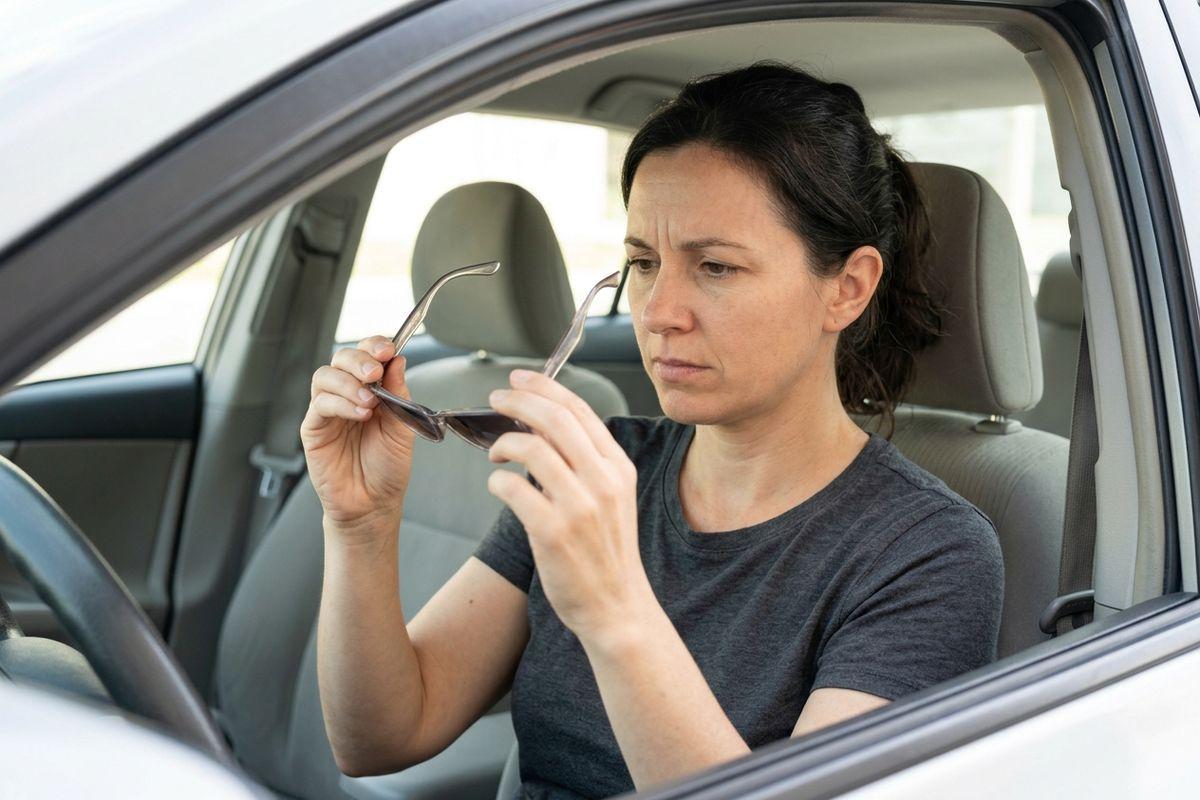
You may feel the result of this process before you see it. For instance, your frames might slide down your nose, sit crooked on your face, or pinch behind one ear.
Lens Damage
Lenses can soften and even melt when heat gets extreme enough, leaving edges that no longer sit flush in the frame. Coatings take a hit too. Anti-reflective and scratch-resistant layers may haze over, crack, or peel away from the surface of the lens.
What you notice is a blurry or distorted patch where the view used to be sharp. If warped frames leave you squinting through glare, prescription and non-prescription sunglasses in good condition make a clear difference.
Signs Heat Damaged Your Sunglasses
Damage doesn’t always announce itself. Watch for these clues.
- A sudden change in fit, like slipping, pinching, or sitting uneven
- Hazy or cloudy patches showing up in bright light
- Ripples or waves when you look at straight lines, such as door frames or road stripes
- Lens edges no longer sitting tight in the frame
What to Do After a Hot Car Day
- Bring your glasses inside and let them cool on their own. Don’t run them under cold water while they’re hot.
- Hold them up in bright, indirect light and look through each lens for haze or ripples.
- Rinse with lukewarm water, add a drop of dish soap, and dry with a microfiber cloth. Skip the dry wipe, since grit can grind into softened coatings.
Where to Store Sunglasses in a Car
Safer Spots
A hard case inside a shaded center console keeps your glasses away from hot plastic and out of direct sun. Tucking them into a bag on the floorboard works too, as long as they’re away from the windows.
The simplest option is carrying your glasses with you.
Dangerous Locations
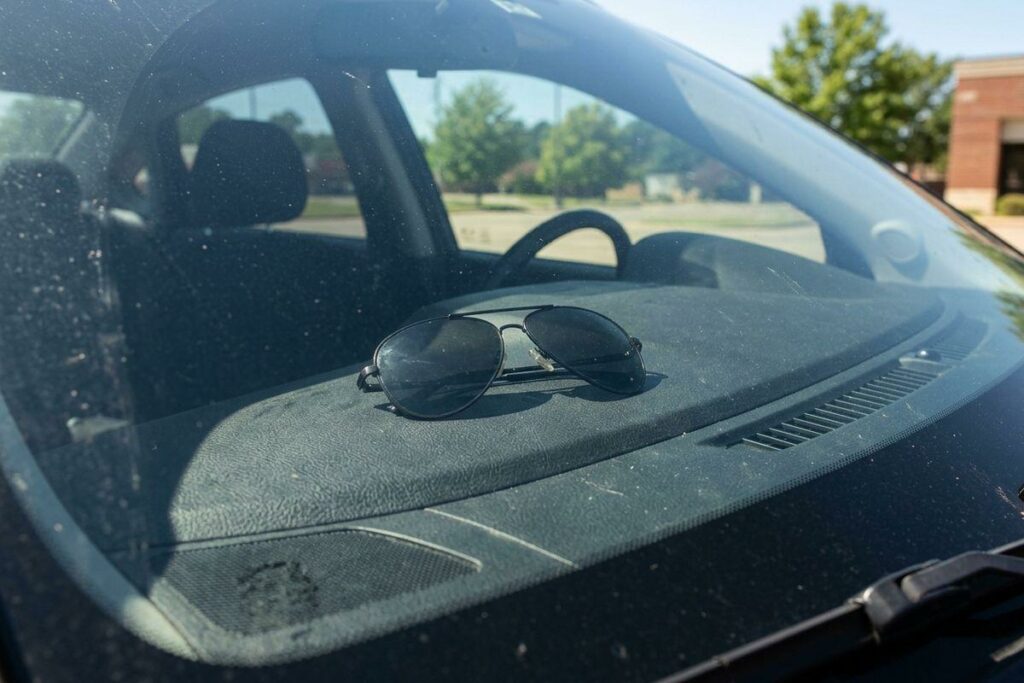
The dashboard and rear window shelf take the full force of the sun and get hotter than anywhere else in the car. Hanging sunglasses from the rearview mirror parks them right in the sunlight and lets them swing into the windshield.
Door pockets seem handy, but they’re an easy place to crush a frame with a knee or an elbow.
Common Myths About Sunglasses & Heat
A case protects against scratches and pressure, not temperature. The inside of a closed case in a hot car heats up right along with everything else.
Dark lenses don’t resist heat either. Tint controls how much light reaches your eyes, and it has nothing to do with how the lens material handles high temperatures.
Reshaping warped frames with hot water at home is risky. Too much heat, or heat in the wrong spot, can crack a frame or loosen the lenses.
When to See an Eye Doctor in Longview
Bring your sunglasses in when the fit turns crooked or loose, since a proper adjustment can straighten temple arms and tighten hardware safely. Damaged coatings usually mean a lens replacement rather than a repair.
If your vision feels off when you’re wearing your lenses, or if you notice headaches and eye strain after wearing them, an eye doctor in Longview can check both your lenses and your eyes.
Keep Your Sunglasses in Shape
Small habits protect your sunglasses. Store them in the console instead of the dashboard, cool them down before cleaning them, and get warped frames adjusted promptly.
Our team at Eye Care for East Texas can check your frames, replace worn lenses, and help you find sunglasses built for long East Texas afternoons. Book an appointment today.